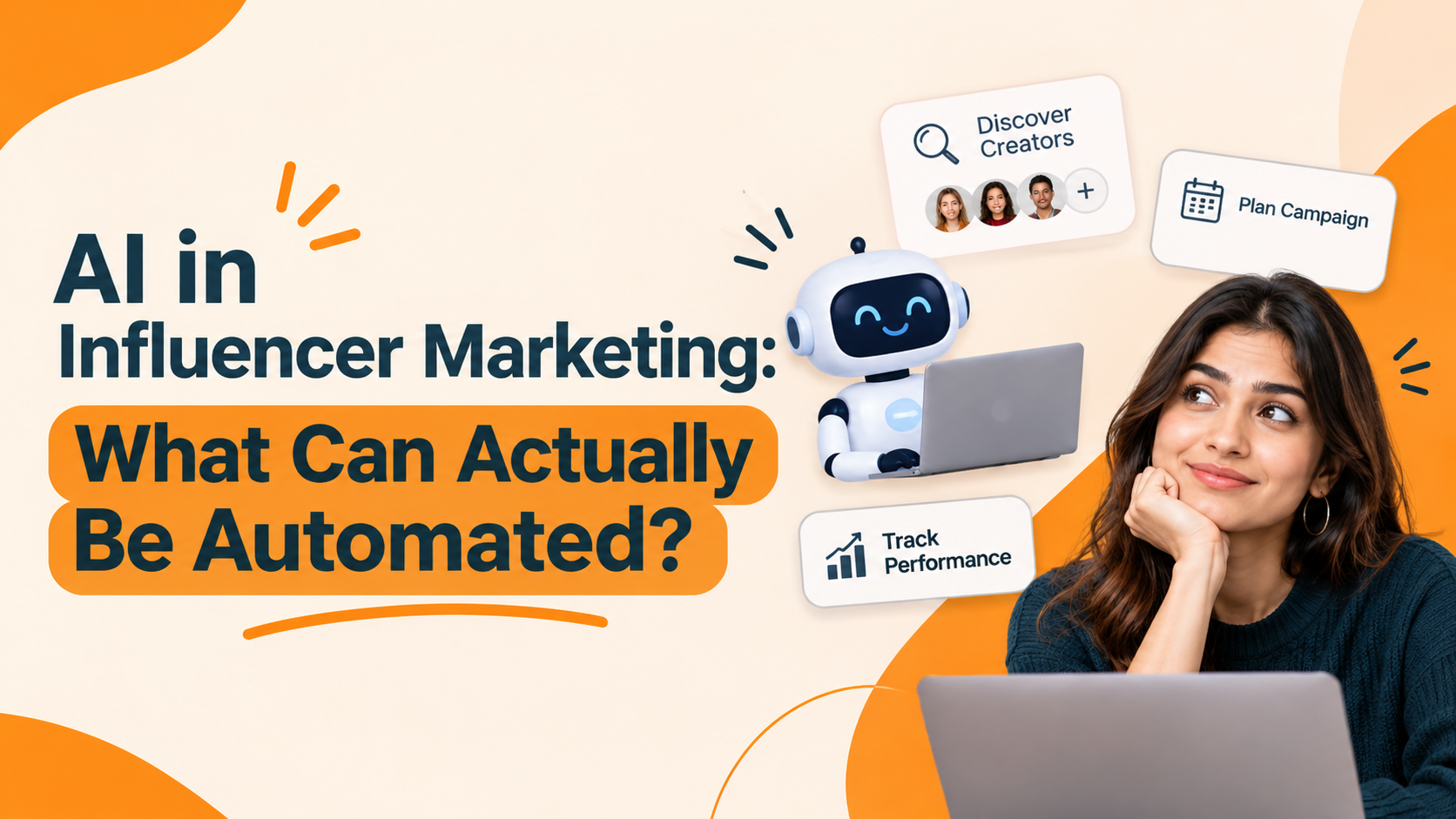
Influencer marketing relies heavily on data to make the right decisions, from selecting creators to evaluating campaign performance. But finding the right data, analysing it, and measuring results manually can take up a considerable amount of time.
Now, we've got AI!
Tasks that once required hours of manual research and coordination can now be completed much faster with AI-powered tools. But how much of influencer marketing can actually be automated?
Let's look at the key areas where AI makes a difference.
1. Influencer Discovery
Finding creators who match a brand's target audience can be time-consuming. AI-powered influencer discovery tools simplify this process by helping brands:
- Search creators by niche, location, audience, and interests.
- Generate creator shortlists based on specific campaign required creator filters.
This reduces manual searching and helps marketers focus on creators who are more relevant to their campaigns.
2. Creator Analysis and Audience Insights
Follower count alone doesn't determine whether an influencer is right for a brand. AI can analyse creator profiles to provide insights into:
- Audience demographics and interests.
- Engagement quality and audience authenticity.
- Content relevance and sentiment.
- Potential brand safety concerns.
These insights help brands make more informed creator selection decisions.
3. Campaign Planning and Budget Allocation
AI can help brands turn campaign objectives into complete influencer campaign plans. Based on the brief, budget, and target audience, it can help with:
- Suitable creator categories and influencer tiers.
- Potential campaign deliverables and content formats.
- Creator mix and budget distribution.
- Initial campaign timelines and structures.
The final strategy, however, should account for business goals, creator costs, and brand priorities.
4. Influencer Outreach and Content ideation
Managing communication with multiple creators involves repetitive tasks. AI can help marketers draft personalized outreach emails, follow-ups, campaign invitations, and influencer briefs.
It can also suggest concept ideas and key messaging based on campaign objectives.
This saves time while allowing marketers to focus on building genuine creator relationships and refining the creative direction.
5. Campaign Tracking and Reporting
Once a campaign goes live, AI can help organize and analyze performance data.
This includes:
- Tracking creator deliverables and campaign progress.
- Monitoring reach and engagement.
- Analyzing clicks and conversions where tracking data is available.
- Comparing creator performance.
- Generating campaign reports and summaries.
Instead of manually compiling data, teams can spend more time understanding what worked and what needs improvement.
What Still Needs Human Expertise?
AI can automate repetitive and data-heavy tasks, but influencer marketing still depends on human judgement.
Building creator relationships, evaluating creative authenticity, negotiating partnerships, and understanding audience sentiment require context that goes beyond data.
AI can recommend creators, but marketers must decide whether those creators genuinely fit the brand. It can suggest content ideas, but creators bring the personality and perspective that make content relatable.
Bringing AI into Your Influencer Marketing Workflow
The real value of AI in influencer marketing lies in combining automation with human expertise.
Platforms like Starbuzz.ai help brands and agencies simplify different stages of influencer marketing, from AI-powered creator discovery and audience analysis to campaign planning, tracking, and performance reporting.
By reducing manual work and bringing campaign activities into a more connected workflow, AI allows marketing teams to focus on better decisions and stronger creator partnerships.
AI shouldn't replace influencer marketing expertise. It should make it more effective.