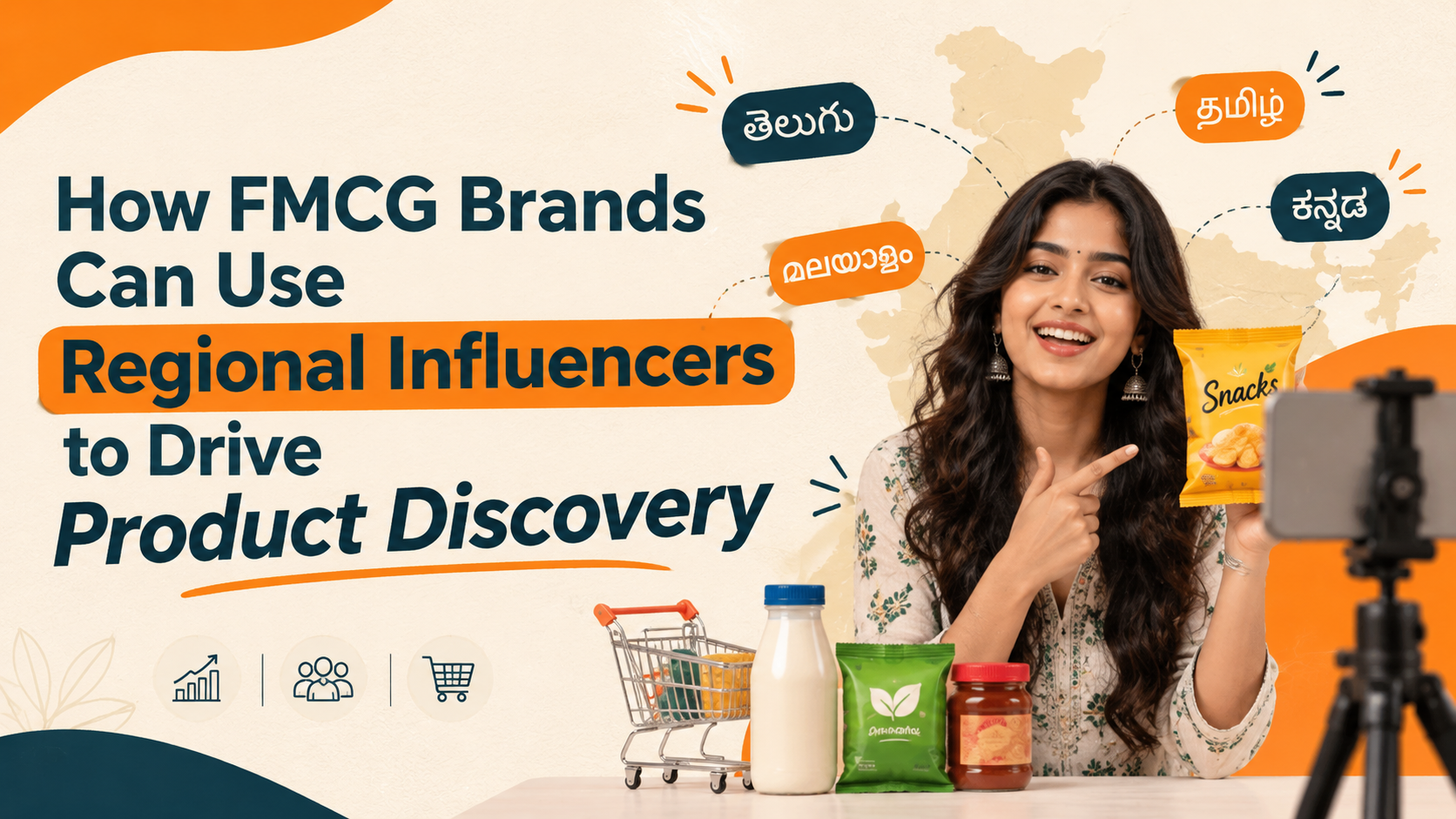
For FMCG brands, getting a product onto store shelves is only half the job. Consumers also need to recognise it, understand what makes it useful, and have a reason to try it.
This is where regional influencer marketing can make a difference.
India has diverse languages, food habits, lifestyles, and shopping preferences. A campaign that connects with consumers in one region may not have the same impact in another. Regional influencers help brands communicate with local audiences in ways that feel familiar and relevant.
Why Regional Influencers Matter for FMCG Brands
FMCG products such as food, beverages, personal care, home care, and packaged goods are part of everyday life. Consumers often discover these products through recommendations, reviews, demonstrations, and conversations.
Regional influencers can make these interactions more relatable for three reasons:
1. They understand local preferences
For example, A food creator from Hyderabad may understand the city's food culture and preferences better than a creator whose audience is spread across the country. This helps brands present products in familiar, everyday situations.
2. They communicate in familiar languages
Content in regional languages can make product information easier to understand and more personal. It also allows creators to use local expressions, references, and humor that connect naturally with their audience.
3. They build stronger local connections
Consumers may recognize creators who regularly talk about places, products, and experiences relevant to their region. This familiarity can make product recommendations feel more approachable.
5 Ways FMCG Brands Can Use Regional Influencers
1. Introduce Products Through Everyday Content
Instead of making every collaboration look like an advertisement, brands can work with creators to show how a product fits into everyday routines.
For example:
- A regional food creator can use a new cooking ingredient in a familiar recipe.
- A lifestyle creator can add a new personal care product in their daily routine.
- A home and lifestyle creator can demonstrate how a cleaning product is used at home.
The idea is to help consumers understand where the product fits into their lives.
2. Create Content in Regional Languages
Language can influence how consumers understand and respond to a product.
A campaign for a packaged food brand, for example, could use creators who speak Telugu, Tamil, Kannada, Malayalam, Bengali, or Marathi, depending on the target market.
Rather than simply translating the same advertisement, brands should allow creators to adapt the message to their audience while keeping the product information and campaign objectives consistent.
3. Work With Micro and Local Influencers
A large national influencer may offer broad visibility, but smaller regional creators can help brands reach more specific communities.
For example, a skincare brand entering Kerala could collaborate with beauty creators who have an engaged local audience. A beverage brand launching in Pune could work with local food and lifestyle creators.
The important thing is not just the creator's location or follower count. Brands should check whether their audience matches the people they want to reach.
4. Build Campaigns Around Regional Occasions and Habits
Festivals, local celebrations, seasonal changes, and everyday cultural practices can create natural opportunities for FMCG product discovery.
For example:
- Food brands can collaborate with regional cooking creators around local festivals.
- Personal care brands can create summer or monsoon-focused content with local lifestyle creators.
- Beverage brands can use creators to introduce products during regional events and seasonal occasions.
These campaigns work best when the product has a genuine connection to the occasion rather than being added to the content simply for visibility.
5. Connect Influencer Content With Offline Availability
For FMCG brands, product discovery should ideally lead to product trial and purchase.
Influencer campaigns can support this by:
- Mentioning where the product is available.
- Highlighting nearby retail stores or supermarkets.
- Sharing product links for online purchases.
- Using location-specific offers or discount codes.
- Creating content around new store launches or product availability.
This helps connect what consumers see online with where they can actually buy the product.
How to Choose the Right Regional Influencers
Choosing creators based only on their city or language can lead to poor campaign results. FMCG brands should evaluate a few important factors before collaborating.
Audience location: Does the creator have a meaningful audience in the cities or states you're targeting?
Language and cultural relevance: Can the creator communicate naturally with the intended audience?
Content category: Does their content connect with your product category? A food creator may be a natural fit for a cooking ingredient, while a home creator may be better suited to a cleaning product.
Engagement quality: Do people genuinely interact with their content through comments, questions, and discussions?
Brand suitability: Does their content style and public image align with your brand?
A smaller creator with a relevant local audience may be more useful than a larger creator whose followers are spread across unrelated markets.
How Can FMCG Brands Measure Product Discovery?
Product discovery is not measured by views alone. Brands should look at whether the campaign helped more people notice, understand, and consider the product.
Some useful metrics include:
- Reach and impressions: How many people saw the content?
- Video views and watch time: Did people actually spend time watching it?
- Saves and shares: Did viewers find the content useful or relevant enough to revisit or share?
- Comments and brand mentions: Are people asking about the product or discussing it?
- Search interest: Did searches for the brand or product increase during the campaign?
- Store visits and sales: Did the campaign contribute to more product enquiries, trials, or purchases in the target market?
Where possible, compare results across campaign regions and against a baseline period. This helps brands understand which creators, locations, and content formats contributed most to product discovery.
Common Mistakes FMCG Brands Should Avoid
A few mistakes can make regional influencer campaigns less effective:
- Choosing creators only by follower count: Large audiences don't always mean local relevance.
- Using the same content everywhere: Regional audiences may respond differently to language, references, and product preferences.
- Over-controlling creator content: Scripts that sound like advertisements can reduce the creator's natural connection with their audience.
- Ignoring product availability: Promoting a product in a location where consumers cannot easily buy it creates a gap between interest and action.
- Measuring only views: Visibility is useful, but it doesn't tell the full story of product discovery or purchase intent.
Final Thoughts
Regional influencer marketing gives FMCG brands an opportunity to connect with consumers through people, languages, and content that feel familiar to them.
The most effective campaigns don't simply divide a national campaign into different states. They consider what local consumers care about, which creators they trust, and how the product fits into their everyday lives.
For FMCG brands, the takeaway is simple: don't just focus on how many people see your product. Focus on whether the right people discover it, understand it, and have a reason to try it.