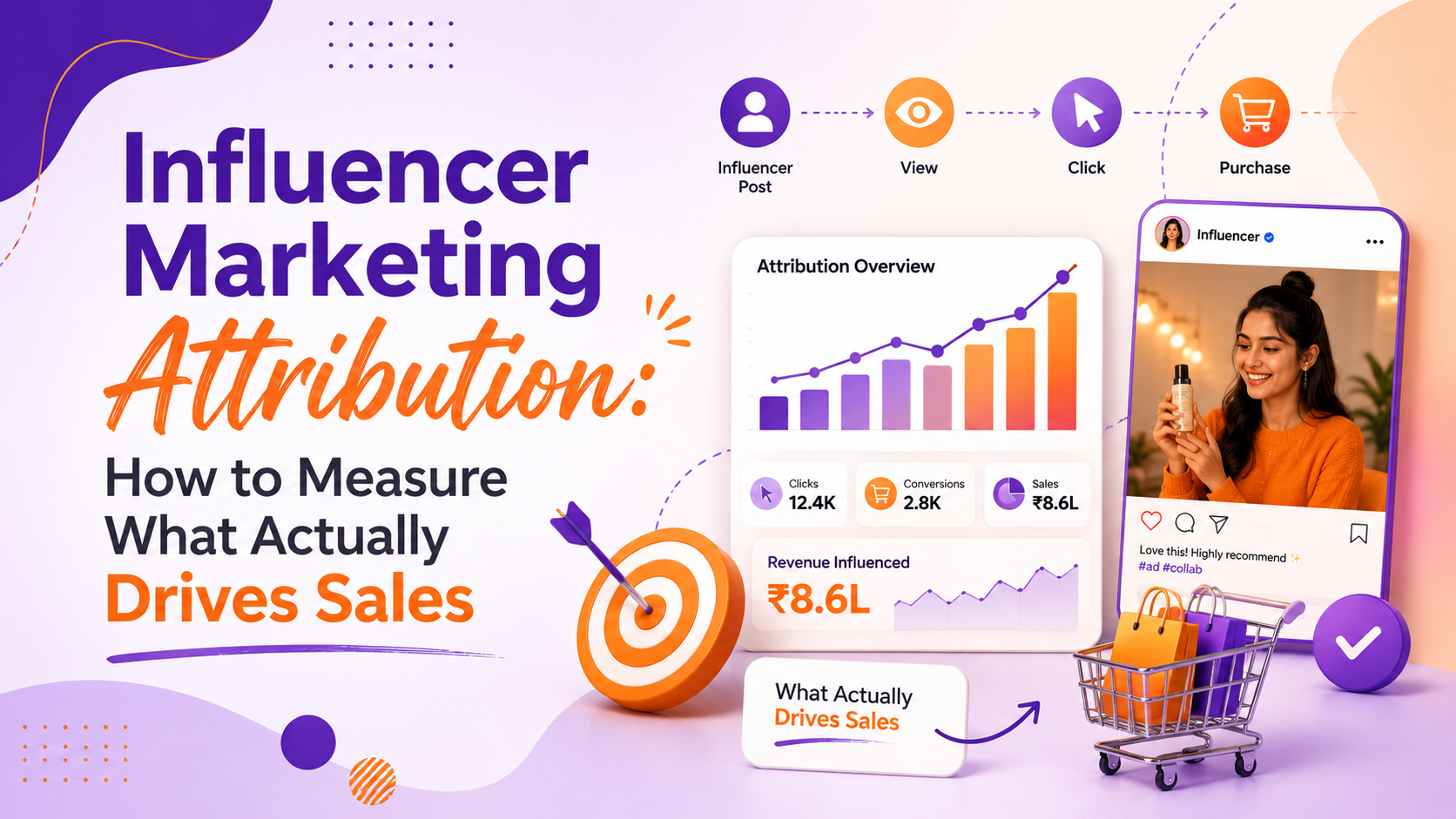
An influencer posts about your product... Your website traffic increases... Sales go up... But your analytics says the customer came from Google.
So who gets the credit?
This is the problem with influencer marketing attribution.
A customer may discover your brand through an influencer, search for you later, see a retargeting ad, and eventually make a purchase.... If you only track the final click, the influencer who started the journey may get zero credit.
That's why measuring views, likes, or even promo code sales alone isn't enough.
What Is Influencer Marketing Attribution?
Influencer marketing attribution is the process of tracking creator activity in terms of the measurable business outcomes they achieve, such as:
- Website visits
- Leads
- Conversions
- Sales
- Revenue
The goal is simple: Understand which creators are actually contributing to business results.
1. Give Every Creator a Unique Tracking Link
One of the simplest ways to track influencer sales is through unique URLs.
Use UTM parameters to identify:
- The platform
- The campaign
- The creator
- The specific content
This helps brands see which creators are driving traffic and conversions instead of combining all influencer traffic into one number. For example, two creators may generate the same number of clicks, but one may drive significantly more purchases.
2. Use Unique Promo Codes
Promo codes are useful because customers don't always click a creator's link.
Some of them might watch a Reel, search for your brand later, and use the creator's discount code at checkout.
Giving each creator a unique code makes it easier to connect direct sales with their partnership.
However, promo codes alone don't show the complete picture. Many customers may be influenced by a creator but purchase without using their code.
3. Separate Direct and Assisted Conversions
Not every creator-driven sale happens immediately.
While a creator may introduce the customer to your brand, another channel may have completed the sale. This is where brands should look beyond last-click attribution.
Track both:
- Direct conversions → Customers who click or use a creator's code and purchase.
- Assisted conversions → Customers influenced by creator content but who return through another channel before purchasing.
This gives your team a more realistic view of influencer marketing ROI.
4. Avoid Double Counting Revenue
Using tracking links, affiliate links, and promo codes is useful, but there is one problem.
The same sale can appear in multiple tracking systems.
If every system claims credit for that order, your campaign revenue becomes inflated.
Create clear attribution rules before the campaign begins and use one reliable reporting source to determine how revenue is credited.
5. Compare Creator Performance Beyond Sales
Sales are important, but they don't tell the entire story.
Look at the customer journey:
Creator → Traffic → Product Interest → Conversion → Revenue
Track metrics such as:
- Clicks
- Conversion rate
- Cost per acquisition
- Revenue per creator
- Average order value
- Customer quality
This helps brands identify whether a creator is driving valuable customers, not just temporary traffic.
Did the Creator Actually Drive the Sale?
Perfect attribution is difficult as not every customer journey is linear.
That's why the strongest influencer marketing measurement combines multiple signals, including UTM links, promo codes, affiliate tracking, conversion data, and customer feedback.
The goal is to build a clear enough measurement system to make better decisions.
Measure Influencer Performance With Starbuzz.ai
Managing creator links, promo codes, campaign data, and performance reports across spreadsheets can make attribution unnecessarily complicated.
Starbuzz.ai helps brands and agencies manage influencer campaigns and understand creator performance in one place.
From creator discovery and campaign management to performance tracking and analytics, brands can use campaign data to identify which creators are contributing to meaningful results.
Explore Starbuzz.ai to see how you can build a more measurable influencer marketing workflow.
Final Takeaway
The biggest attribution mistake brands make is giving all the credit to the final click.
Influencers often create the first moment of interest.
The sale may happen then or later.
By tracking creator links, promo codes, conversions, and assisted journeys, brands can move closer to understanding what actually drives sales and which creators are worth investing in again.