Say you're launching a new skincare brand.
You have two options.
-> Option 1: Work with one micro influencer who has 80,000 followers.
-> Option 2: Work with ten nano influencers, each with 8,000 followers.
Both choices reach roughly the same number of people.
But will they deliver the same results?
Not necessarily.
The right choice depends on what you're trying to achieve.
What Are Nano and Micro Influencers?
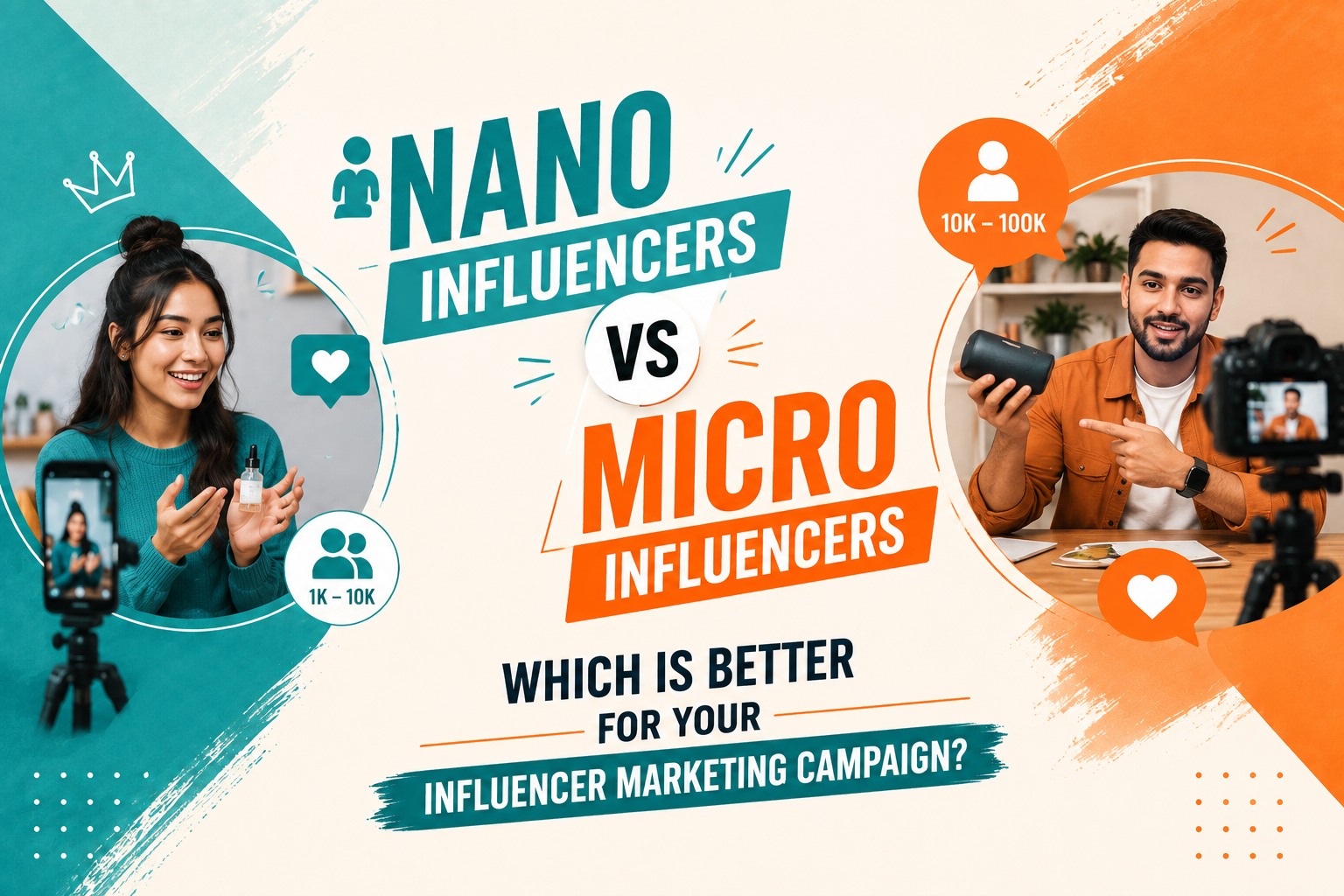
While follower counts can vary slightly across platforms, they're generally classified as:
- Nano influencers: 1,000–10,000 followers
- Micro influencers: 10,000–100,000 followers
The difference isn't just audience size, it's how those audiences interact with the creator.
Choose Nano Influencers When You Want Local Trust
Nano influencers often have smaller but highly personal communities. Their followers are usually friends, local communities, or people who genuinely follow their recommendations.
They're a great fit for:
- Local business launches
- Restaurant openings
- Community events
- Product sampling campaigns
- Regional marketing
Example:
A café opening in Hyderabad may get better results by collaborating with 15 local nano food creators than with one creator whose audience is spread across India.
Choose Micro Influencers When You Want to Scale
Micro influencers help brands reach a little larger, niche-specific audiences while still maintaining strong engagement.
They're ideal for:
- Product launches
- D2C brands
- E-commerce campaigns
- Affiliate marketing
- National campaigns
Example:
A fitness brand launching a new protein supplement could partner with micro fitness creators across different cities to reach thousands of potential buyers who already care about health and fitness.
It's Not About Followers. It's About Campaign Goals
Many brands automatically choose creators with bigger audiences.
Instead, ask:
What does this campaign need?
-> If you're trying to build trust in a specific city, nano influencers may be the better choice.
-> If you're trying to scale a campaign across multiple regions, micro influencers can help you do that more efficiently.
Sometimes, the Best Strategy Is Both
Many successful brands combine them.
For example:
- Use micro influencers to create broad niche awareness.
- Use nano influencers to drive conversations within local or niche communities.
This gives your campaign both reach and authenticity.
How Starbuzz.ai Helps You Choose the Right Creators
The hardest part isn't deciding between nano and micro influencers.
It's finding the ones whose audience actually matches your campaign.
With Starbuzz.ai, brands can discover creators based on audience demographics, interests, location, and niche, not just follower count.
This helps you build a creator mix that's aligned with your campaign goals instead of relying on audience size alone.
Looking for creators who actually fit your campaign? Sign up for Starbuzz.ai and discover influencers based on audience fit, not just follower count.
You can take a quick demo, and explore how Starbuzz.ai can fit your influencer marketing workflow
Final Thoughts
There's no universal winner in the nano vs micro influencer debate.
Nano influencers can help you build trust within smaller communities.
Micro influencers can help you scale campaigns to larger, targeted audiences.
The best campaigns win because they focus on 'Which creators are most likely to influence the audience we want to reach' That's what leads to better influencer marketing results.