What Is a Good Instagram Engagement Rate?
If you're a brand, agency, or marketing manager, one of the first metrics you'll check before partnering with an influencer is their Instagram engagement rate.
A creator may have hundreds of thousands of followers, but if very few people interact with their content, your campaign may not deliver the results you're expecting.
That's why Instagram engagement rate remains one of the most important influencer marketing metrics. It helps brands compare creators, evaluate audience quality, and make more informed partnership decisions.
The challenge is that there isn't one universal "good" engagement rate.
A 4% engagement rate may be excellent for one creator but average for another. It depends on factors like audience size, niche, content type, and follower quality.
What Is Instagram Engagement Rate?
Instagram engagement rate measures how actively a creator's audience interacts with their content.
It typically includes:
- Likes
- Comments
- Shares
- Saves
- Story interactions
- Reel interactions
For brands, engagement rate is often a stronger indicator of creator performance than follower count because it reflects how actively an audience participates with the content.
How to Calculate Instagram Engagement Rate
The most commonly used formula is:
Engagement Rate = (Likes + Comments + Shares + Saves) ÷ Followers × 100
Some brands also calculate engagement based on reach or impressions, especially when measuring paid influencer campaigns.
While this calculation is simple for one creator, comparing dozens or hundreds of creators manually can be time-consuming.
👉 You can try our Free Instagram Engagement Rate Calculator to evaluate creators instantly.
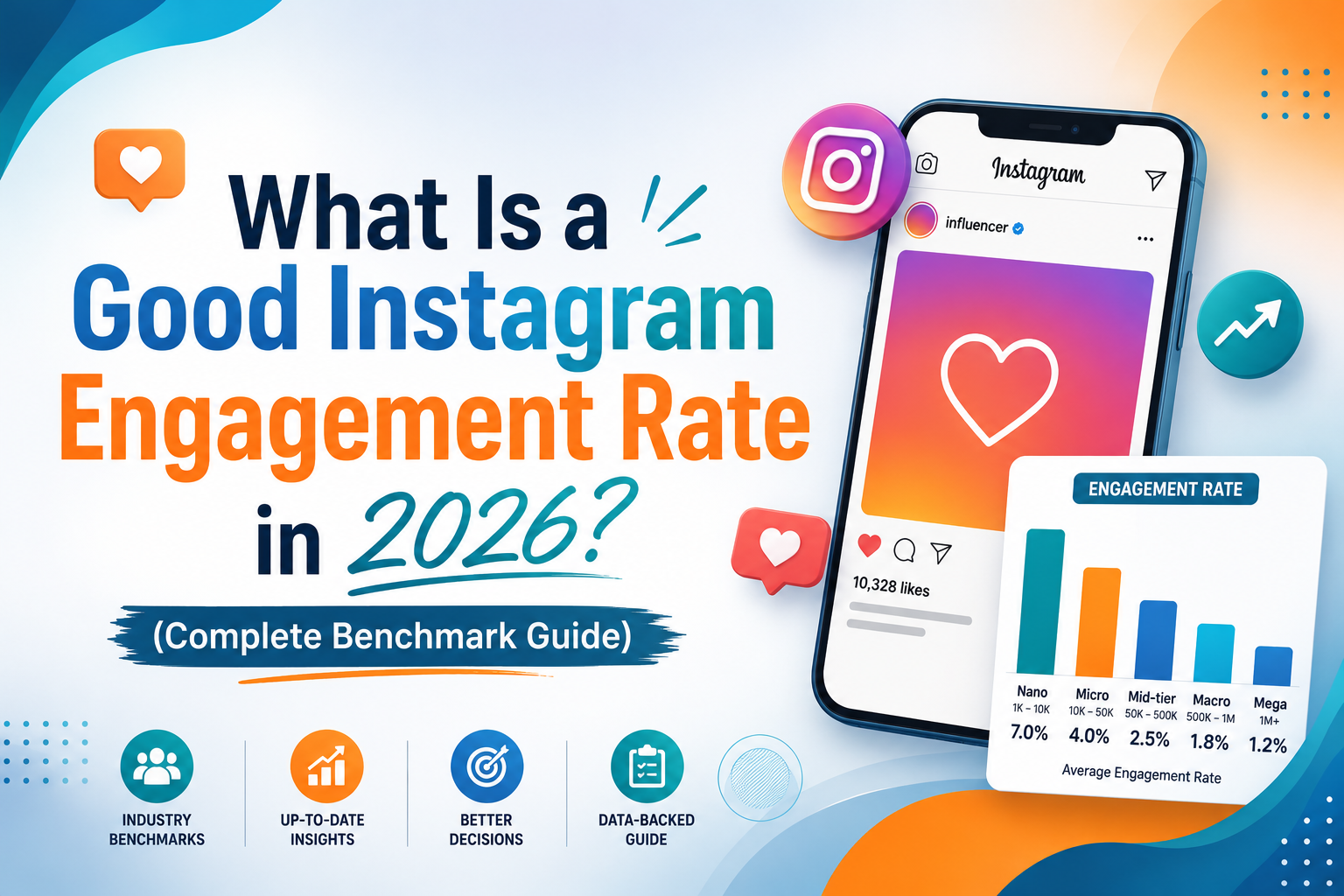
Instagram Engagement Rate Benchmarks by Follower Count
Although engagement varies by industry and niche, these benchmarks provide a useful starting point when evaluating creators.
Nano Creators (1K–10K followers)
Average engagement rate: 4–8%
Nano creators often have highly engaged communities and are commonly used for community-driven campaigns, product launches, and user-generated content.
Micro Influencers (10K–100K followers)
Average engagement rate: 2.5–5%
Micro influencers are one of the most popular choices for influencer marketing because they balance audience reach, engagement, and campaign cost.
Mid-Tier Creators (100K–500K followers)
Average engagement rate: 1.8–3.5%
Mid-tier creators provide greater reach while still maintaining healthy engagement for many campaign objectives.
Macro Influencers (500K–1M followers)
Average engagement rate: 1.5–3%
They are typically chosen for large awareness campaigns, although engagement naturally declines as audiences grow.
Mega Influencers (1M+ followers)
Average engagement rate: 1–2.5%
Large creators offer significant visibility, but brands should always evaluate engagement quality alongside audience relevance and authenticity.
How Brands Use Engagement Rate to Evaluate Influencers
Engagement rate is often one of the first metrics brands review during influencer discovery.
A healthy engagement rate can indicate:
- An active audience
- Strong audience trust
- Relevant content
- Better campaign potential
However, engagement rate should never be evaluated on its own.
Before collaborating, brands should also consider:
- Audience demographics
- Audience authenticity
- Creator niche
- Content quality
- Previous brand collaborations
- Overall brand fit
A creator with a slightly lower engagement rate but a highly relevant audience may deliver stronger campaign results than a creator with higher engagement but poor audience alignment.
What Else Should Brands Look At?
A good engagement rate is only one part of choosing the right creator.
Brands should also evaluate:
Audience Authenticity
Fake followers and bot engagement can make engagement rates look stronger than they actually are.
Related reading: How Brands Can Check Influencer Authenticity
Engagement Quality
Not all engagement is meaningful.
Look for:
- Genuine conversations
- Relevant questions
- Detailed comments
- Creator responses
Large numbers of generic emojis or repetitive comments may indicate low-quality engagement.
Audience Relevance
A creator should reach the audience your brand wants to influence.
For example, a skincare brand benefits more from a beauty creator with 30,000 highly relevant followers than a general entertainment creator with 500,000 followers.
Content Consistency
Review how consistently the creator publishes quality content and whether previous sponsored posts feel natural.
You might also want to read: 5 signs an influencer is right for your brand
Common Mistakes Brands Make When Evaluating Engagement
Many brands still rely on surface-level metrics.
Common mistakes include:
- Choosing creators based only on follower count
- Comparing creators from different niches
- Ignoring audience authenticity
- Looking only at likes instead of overall engagement
- Not reviewing comment quality
- Overlooking audience demographics
The best influencer marketing decisions combine engagement data with audience insights and campaign goals.
Frequently Asked Questions
What is considered a good Instagram engagement rate?
For most creators, an engagement rate between 2% and 5% is generally considered good, although benchmarks vary by follower count and niche.
Is 5% engagement good on Instagram?
Yes. An engagement rate above 5% is typically considered excellent, particularly for nano and micro influencers.
Should brands only use engagement rate when selecting influencers?
No.
Brands should evaluate engagement alongside audience demographics, authenticity, creator relevance, campaign objectives, and previous performance.
Why do larger creators have lower engagement rates?
As audiences grow, engagement percentages naturally decline because not every follower interacts with every post.
This is why engagement benchmarks differ across creator tiers.
Final Thoughts
A good Instagram engagement rate isn't simply about getting more likes.
For brands, it's a useful indicator of how actively a creator's audience interacts with their content and whether that creator has the potential to influence purchasing decisions.
However, engagement is only one part of the evaluation process. Combining engagement rate with audience authenticity, creator relevance, and campaign goals helps brands make better influencer marketing decisions.
If you're comparing creators for your next campaign, use our Free Instagram Engagement Rate Calculator to benchmark engagement and identify creators with active, authentic audiences.